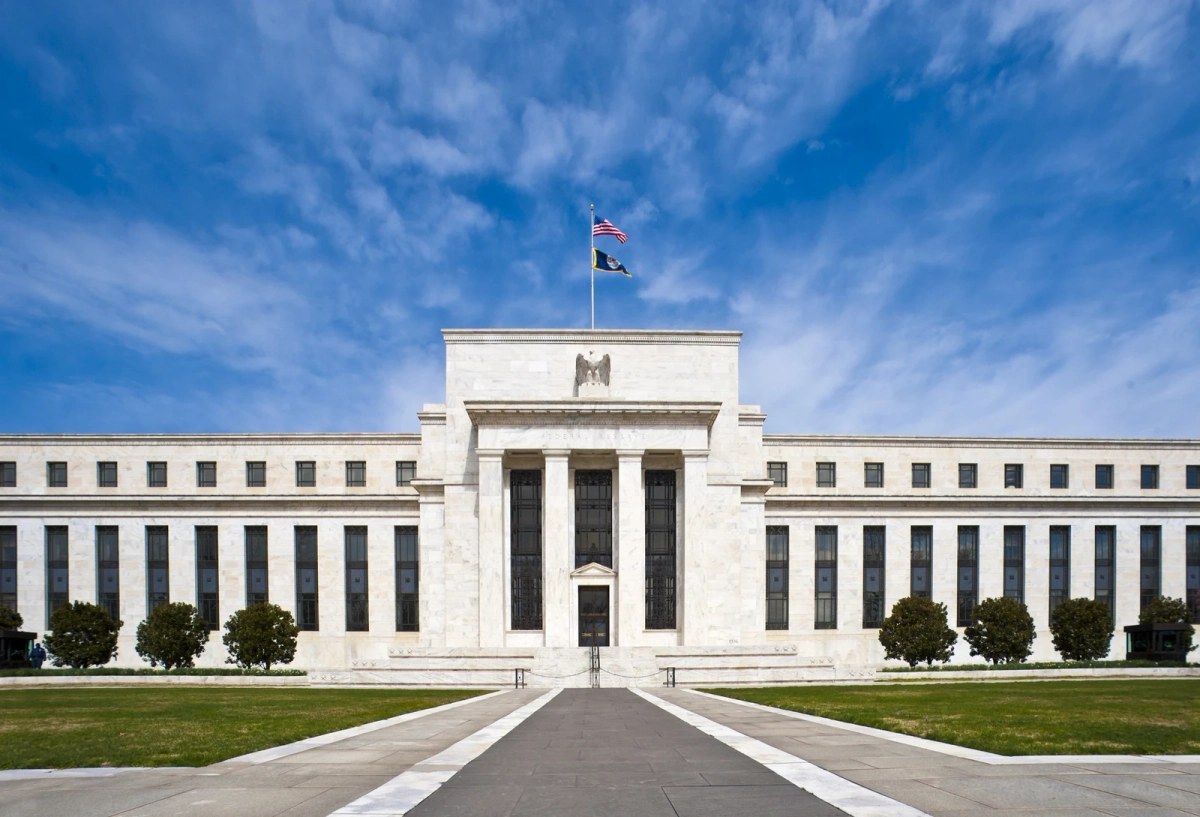
Federal Reserve Governor Michael Barr said additional rate hikes will likely be necessary to bring inflation back to the 2% target. Following last week's FOMC decision to raise the benchmark rate for the first time in three years and two months, voices within the Fed advocating for continued tightening are gaining momentum.
In prepared remarks for a September 23 (local time) conference on housing affordability hosted by the Federal Reserve Bank of Chicago, Barr assessed that "risks around achieving the inflation target have grown while labor market risks have receded." He explained that while U.S. economic growth remains strong and the labor market is solid, inflation still exceeds the Fed's target and shows no clear downward trend.
"In my baseline scenario, further policy adjustments will likely be needed to bring inflation down to target in a timely manner," Barr said. He did not specify a timeline, but the remarks are interpreted as signaling that at least two additional hikes this year may be necessary.
Alignment with the FOMC Decision
The Fed raised the benchmark rate by 0.25 percentage points at the September 16 FOMC meeting, bringing it to a range of 3.75%–4.00%. It was the first increase since July 2023. At the time, 16 of 18 committee members projected at least one more rate hike by year-end. Barr's comments are even more hawkish, underscoring that differences of opinion exist within the Fed over the pace of inflation response.
Barr assessed last week's decision by saying, "Given the changes in the economy, we were not in the right place, and we adjusted in the right direction." He added, "I want to support sustainable and durable growth that supports maximum employment, and price stability is critically important for that."
His remarks drew particular attention because they contrast with Fed Chair Kevin Warsh, who has consistently rejected any form of forward guidance on the rate path. While Warsh has maintained a stance of not providing specific signals about the future direction of rates, Barr has relatively clearly articulated his view on where monetary policy should head.
Mounting Pressure on the Housing Market
Barr's speech devoted more attention to housing affordability than to monetary policy itself. He highlighted that housing supply shortages and rising mortgage rates continue to worsen home purchase conditions across the United States.
He separately addressed the sharp rise in rents since the pandemic. As of August this year, the Consumer Price Index (CPI) for primary residence rents stood 34% higher than in December 2019. Rent growth has slowed significantly from its 2022–23 peak but is still rising at an annualized rate of roughly 2.75%. He noted that rent-to-income ratios have risen substantially, with low-income renter households in particular spending a larger share of income on housing costs.
The Home Ownership Affordability Monitor (HOAM) index produced by the Federal Reserve Bank of Atlanta hit 68 in July, its lowest level in 21 years. A reading below 100 indicates that a median-income household cannot comfortably afford a median-priced home.
According to the Mortgage Bankers Association (MBA), the average U.S. 30-year fixed-rate mortgage rose 15 basis points (0.15 percentage points) week-over-week to 7.12% for the week ending September 18, the highest since May 2024. Total mortgage applications fell 1.5% from the prior week, while purchase applications declined 0.8% to their lowest level in four weeks. Refinance applications dropped 2.6%. As fixed-rate burdens grew, more borrowers shifted to adjustable-rate mortgages (ARMs), pushing the ARM share of total applications to 9.8%. The average rate on a 5/1 ARM—fixed for five years before adjusting—was 6.10%, more than a full percentage point below the 30-year fixed rate.
If the Fed's tightening stance persists, mortgage rates could face further upward pressure. This could further dampen home purchase demand and lead to declining transaction volumes across the housing market. Barr maintained that price stability is essential for sustainable long-term growth across the economy, including the housing sector.
Market Reaction: Next Meeting in October
U.S. economic data released on September 23 (local time), the same day as Barr's remarks, also reinforced the case for tightening. S&P Global's September flash Purchasing Managers' Index (PMI) showed services at 58.7, the highest in 59 months, and manufacturing at 56.7, the highest in 53 months. The composite index combining both sectors reached 58.4, the strongest in 62 months. Readings above 50 indicate economic expansion.
In the same survey, S&P Global's overall price index was the highest since October 2022, driven by rising fuel and transportation costs compounded by wage increases. Businesses reported needing more staff to work through backlogs, and the pace of hiring was among the fastest since the series began in 2009.
Markets reacted immediately. According to the CME FedWatch tool, the probability of a rate hike at the October 27–28 FOMC meeting jumped to 73%. The 2-year Treasury yield, most sensitive to Fed policy, rose more than 13 basis points (0.13 percentage points) to 4.9%. While some had expected the Fed to wait until December, after the November midterm elections, the day's data and comments shifted the weight toward October. Observers note that if hawkish Fed officials continue to speak out, market rate expectations could adjust higher.
Divergent Asian Central Banks in the Same Week
In the same week that the Fed returned to tightening after three years and two months, major Asian central banks made different choices.
The Bank of Japan raised its policy rate from 1.00% to 1.25% at its monetary policy meeting on September 17–18. It was the highest level in about 31 years, the first additional hike in three months since June, and the shortest interval since the BOJ ended negative rates in March 2024. The move came as rising oil prices amid Middle East tensions and yen weakness increased the risk of inflation overshooting the 2% target. Governor Kazuo Ueda said "the policy phase has changed," though two board members dissented against the hike.
Immediately after the announcement, the yen actually weakened, sliding to the upper 157 range against the dollar. The hike had already been fully priced in by markets, and with the U.S. signaling further increases, the perception took hold that the U.S.-Japan rate differential would be difficult to narrow. Even at 1.25%, the BOJ's rate remains more than 2.5 percentage points below the Fed's 3.75%–4.00% range.
Taiwan's Central Bank held its policy rate at 2.00% at its board meeting on September 17, marking the tenth consecutive hold. The decision ran counter to the rate hikes by the U.S. and Japan in the same week.
Once added, BigGo Finance appears first in Google Search Top Stories, so you get the broadest, most up-to-the-minute, and most comprehensive global financial news first.