-
White House crypto adviser Patrick Witt called the Clarity Act vote a âmajor disappointment.â
-
Senator Cynthia Lummis said Democrats chose politics over supporting the crypto legislation.
-
Democrats raised concerns about ethics rules and President Trumpâs crypto interests.
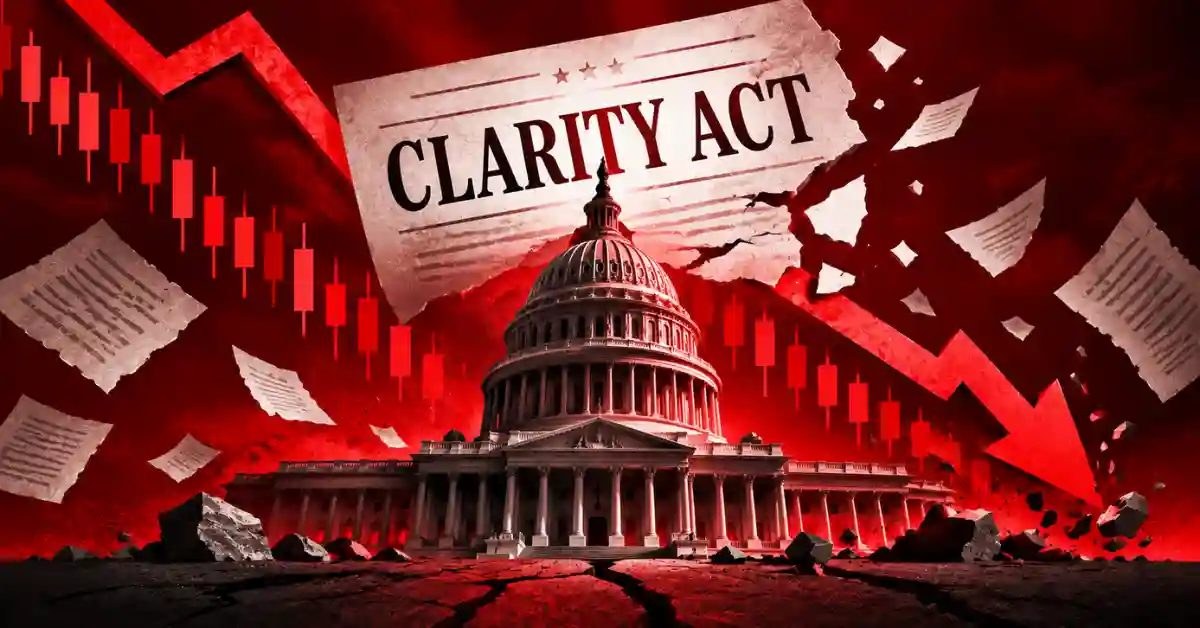
The White House clearly blamed Senate Democrats after the Crypto Clarity Act was blocked in a 49â50 vote, accusing them of âputting partisan games ahead of American technological dominance.âÂ
But the concerns raised over President Donald Trumpâs crypto profits and demands for stronger ethics rules also played a major role in the opposition.
White House Points to Democratic Opposition
The Senate voted 49â50 on September 15 against a motion to advance the Clarity Act. Because the motion needed at least 60 votes to pass, it failed.
After the vote, the White House now blamed Senate Democrats for the failure. A White House statement said Democrats put âpolitical games over doing whatâs best for American technology and innovation.âÂ
White House crypto adviser Patrick Witt called the result a âmajor disappointment.â
Witt also warned that the vote could increase the risk of future global financial standards being shaped by âBrussels or Beijing, rather than Washington and New York.â
Senator Cynthia Lummis, one of the main Republican negotiators, also defended the bill, pointing to changes made during negotiations.
She said the final version included 126 changes requested by Democrats, including new ethics rules and changes covering decentralized finance.
âWe incorporated that into the Clarity Act. Democrats voted no.â
Senate Banking Committee Chairman Tim Scott also blamed Democrats, saying the motion fell short because of Senate Democrats.
Democrats Cite Ethics Concerns
Meanwhile, democrats gave a different reason for opposing the bill. Senator Cory Booker said he would not support legislation that did not adequately address concerns over President Donald Trumpâs crypto interests.
Senator Adam Schiff similarly said stronger and enforceable ethics rules were needed, particularly restrictions on elected officials issuing, sponsoring, or endorsing digital assets.
Republicans Also Voted Against the Bill
Meanwhile, the bill did not fail because of Democratic opposition alone. Four Republican senators, including Susan Collins, Lisa Murkowski, Mitch McConnell, and Thom Tillis, also voted against cloture.Â
Their votes came after strong lobbying from traditional banks, which opposed provisions such as Section 404, limiting stablecoin providers from offering deposit-like yields to U.S. customers.
What the Failed Vote Means for Crypto
The biggest impact is that the U.S. still does not have a single federal framework for the spot digital asset market.
Without the Clarity Act, the CFTC does not receive the new authority proposed by the bill to create a federal registration system for digital commodity exchanges, brokers, and dealers.
As a result, these businesses must continue to deal with different state-by-state money transmitter rules instead of operating under one federal framework.
Was this writing helpful?
Trust with CoinPedia:
CoinPedia has been delivering accurate and timely cryptocurrency and blockchain updates since 2017. All content is created by our expert panel of analysts and journalists, following strict Editorial Guidelines based on E-E-A-T (Experience, Expertise, Authoritativeness, Trustworthiness). Every article is fact-checked against reputable sources to ensure accuracy, transparency, and reliability. Our review policy guarantees unbiased evaluations when recommending exchanges, platforms, or tools. We strive to provide timely updates about everything crypto & blockchain, right from startups to industry majors.
Investment Disclaimer:
All opinions and insights shared represent the author's own views on current market conditions. Please do your own research before making investment decisions. Neither the writer nor the publication assumes responsibility for your financial choices.
Sponsored and Advertisements:
Sponsored content and affiliate links may appear on our site. Advertisements are marked clearly, and our editorial content remains entirely independent from our ad partners.