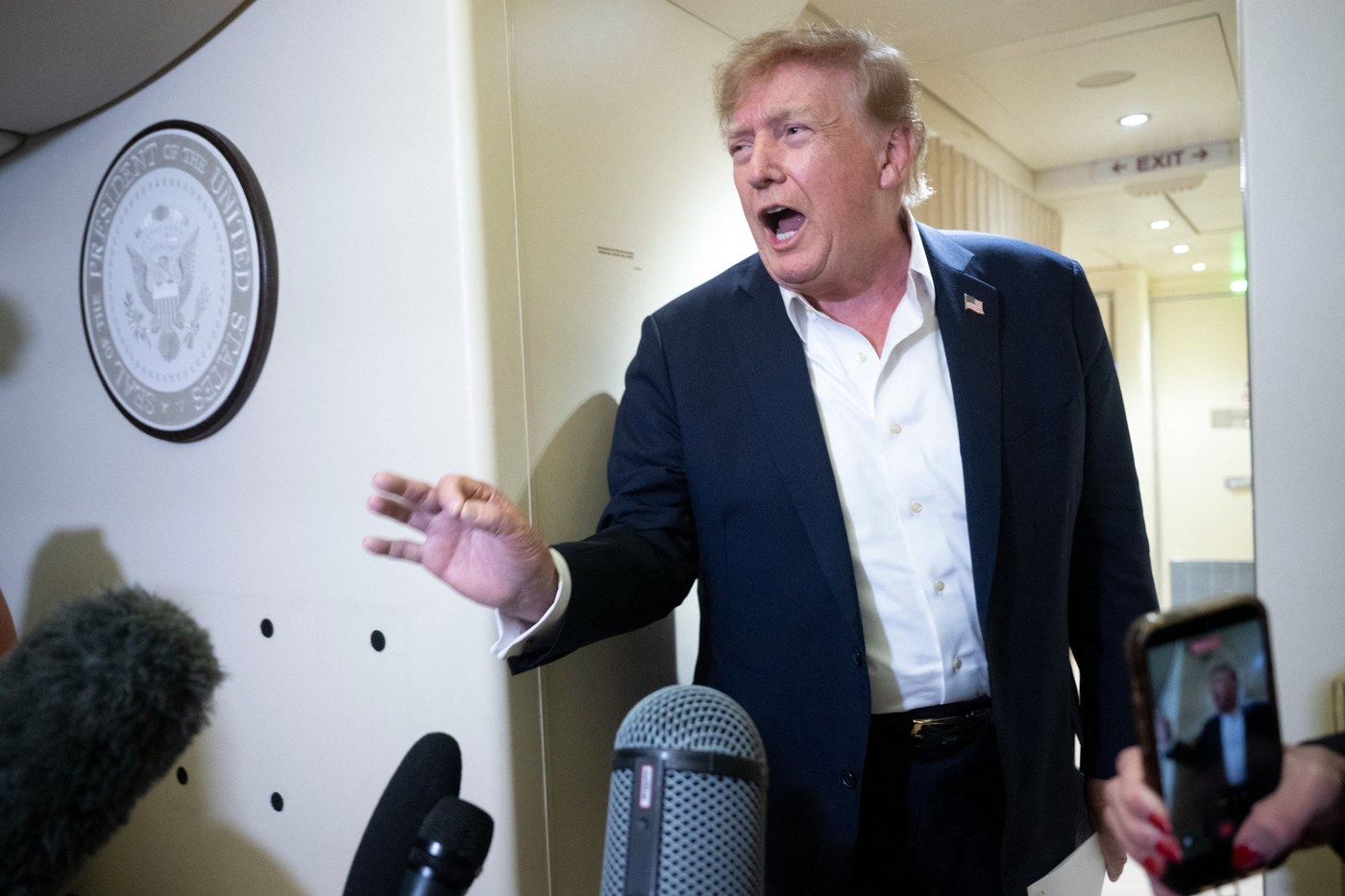
President Trump conceded to bipartisan ethics demands on cryptocurrency oversight, granting state prosecutors enforcement power to unlock key Senate votes.
President Donald Trump has agreed to accept rigorous ethics oversight provisions within comprehensive cryptocurrency legislation, clearing a crucial obstacle ahead of a decisive Senate vote. The concession allows state attorneys general to enforce compliance alongside federal authorities, resolving a contentious deadlock that had threatened to derail the Digital Asset Market Clarity Act. Republican senators Cynthia Lummis of Wyoming, Tim Scott of South Carolina, and John Boozman of Arkansas confirmed the accord after weeks of negotiations with a pivotal bipartisan coalition of lawmakers.
The compromise targets deep concerns regarding Trump's personal digital asset holdings, which Senate Banking Committee Democratic staff recently estimated at 1.4 billion dollars. While the underlying bill initially included a single restriction barring federally elected officials, their spouses, and federal judges from issuing new digital assets, critics argued that narrow prohibition failed to prevent conflicts of interest tied to existing family ventures. The agreement to grant state prosecutors independent enforcement powers provides the legislative momentum needed to advance the bill toward a critical procedural hurdle.
The Conflict of Interest Dispute
Ethics safeguards emerged as the central battleground in negotiations over the 600-page market structure bill. A bipartisan group led by Republican Senator Thom Tillis of North Carolina and Democratic Senators Ruben Gallego of Arizona and Angela Alsobrooks of Maryland warned that the White House's initial proposals left massive loopholes. Under the earlier draft, commercial ventures associated with Trump and his family, including World Liberty Financial and branded digital tokens, fell outside the direct scope of new statutory prohibitions.
Democratic negotiators argued that leaving enforcement solely in the hands of the federal Department of Justice created an unacceptable structural conflict of interest. Because the attorney general and federal prosecutors serve at the pleasure of the president, lawmakers contended that federal oversight alone could not function as a credible deterrent against executive self-dealing. Tillis joined Democrats in demanding explicit statutory authority enabling state attorneys general to investigate and penalize non-compliance independently.
State Enforcement Powers and Executive Apprehensions
The concession to empower state legal officers represents a major shift in White House strategy. During private discussions, administration officials strongly resisted delegating federal enforcement authority to state officials, fearing that Democratic state attorneys general in jurisdictions like New York or California would weaponize the provisions against the president and allied business figures. Conversely, administration aides worried that Republican state prosecutors might retaliate by launching partisan investigations against elected Democrats.
Despite these internal misgivings, White House crypto adviser Patrick Witt publicly endorsed the compromise on Sunday evening, noting that negotiators had accommodated core Democratic policy objectives. Witt declared that after more than a year of intense inter-branch deliberations, the Senate must move forward to establish comprehensive federal standards for the digital asset industry.
To clarify how the adopted compromise alters the regulatory framework, the table below highlights the key differences between the original legislative text and the newly negotiated terms.
Senate Math and the Path to Cloture
The timing of Trump's concession reflects the demanding arithmetic of the United States Senate, where Majority Leader John Thune has scheduled a pivotal cloture vote for Tuesday, September 15. Republicans hold 53 seats in the 100-member chamber, requiring at least seven Democratic crossover votes to attain the 60-vote threshold necessary to overcome a procedural filibuster and open formal floor debate. By satisfying the ethics requirements championed by Tillis and key moderate Democrats, Republican leaders believe they have assembled the necessary votes to proceed.
Sponsors warned that failure to clear the procedural hurdle this week would effectively shelve the legislation for the remainder of the congressional session. With midterm campaign pressures looming and congressional calendars tightening, industry advocates view Tuesday's vote as the final window to enact comprehensive federal guidelines before 2027.
Market Structure and Long-Term Implications
Beyond the personal political fallout for Trump, the CLARITY Act establishes a historic regulatory framework for the multi-trillion-dollar digital asset economy. The bill defines jurisdictional boundaries between the Securities and Exchange Commission and the Commodity Futures Trading Commission, provides explicit legal protections for non-custodial software developers, and resolves longstanding banking disputes regarding stablecoin reward structures.
By assenting to independent state-level scrutiny of his commercial interests, Trump chose legislative pragmatism over legal immunity. The agreement demonstrates that even in an intensely polarized Congress, establishing statutory certainty for an emerging financial sector ultimately required executive submission to decentralized legal accountability.
How did this story land?
No sign-in required. Choose up to two. This captures your response to the story—it is not a vote on whether the reporting is true.
Sources & evidence
The documents, data and reporting consulted for this article. Links open the original material so readers can inspect the evidence directly.
- 01Associated PressTrump agrees to bipartisan ethics provision in crypto bill, GOP senators sayNews reportBy Seung Min Kim Published 14 Sept 2026Accessed 14 Sept 2026
- • President Donald Trump agreed to an ethics proposal granting state attorneys general a meaningful role in enforcing crypto rules
- • Republican Senators Cynthia Lummis, Tim Scott, and John Boozman confirmed Trump agreement
- • Negotiators Thom Tillis and Ruben Gallego demanded state attorney general enforcement
- • White House crypto adviser Patrick Witt endorsed the compromise on Sunday night
- • Senate procedural cloture vote scheduled for Tuesday requires 60 votes to clear filibuster
- 02The IndependentTrump caves to tougher ethics crackdown as his crypto fortune faces scrutinyNews reportPublished 14 Sept 2026Accessed 14 Sept 2026
- • White House officials privately expressed concerns about state attorneys general using enforcement authority against political figures
- • Initial proposal contained only a single restriction barring federal officials, spouses, and judges from issuing digital assets
- • Patrick Witt stated White House and Senate Republicans were responsive to Democratic policy objectives
- 03United States Senate Committee on Banking, Housing, and Urban AffairsBanking Minority Staff Analysis Confirms Clarity Act Would Do Nothing to Prevent Trump From Making His Next $1.4 Billion in Crypto ProfitsPrimary documentPrimaryBy Senate Banking Committee Minority Staff Published 30 Jul 2026Accessed 14 Sept 2026 S-BANK-2026-07
- • Senate Banking Committee Democratic staff calculated Trump crypto holdings and windfall at 1.4 billion dollars
- • Staff analysis concluded initial legislative drafts excluded existing commercial digital asset ventures from conflict prohibitions
Hot discussions around this story
Keep the conversation in one place—threads here stay linked to the story and in the forums.
Start a conversation about this story and keep it linked here.
No trending threads yet—start one above.
Continue reading
No weak match is forced. These are the latest verified stories from Politics.